Showing posts with label St. John's Seminary. Show all posts

Friday, April 16, 2010

PILOT Numbers Behind McGrory's Metro Column on BC

The Boston Globe's Brian McGrory has done his best to channel Howie Carr in today's metro op-ed column about how Boston College should be paying more in Payments in Lieu of Taxes (PILOT) to the City of Boston.

The problem with McGrory's argument that BC should contribute more PILOT to the city is that he didn't give a handle on what might be a reasonable expectation for those payments, particularly since only some of BC's property is located within Boston's city limits.

By looking at what BC might be expected to contribute in PILOT under the proposal recently made by the city's PILOT reform commission, BC ought to be contributing at least $1.6 million more to the city than they are currently paying through PILOT and real estate taxes.

Here's how I come by that number: Boston College's existing Chestnut Hill campus (just that part within the Boston city limits) are currently assessed at a valuation of around $480 million, according to the city's website. Add to that the 16-story apartment building at 2000 Commonwealth Avenue they purchased in 2008 and the former St. John's Seminary land they purchased from the Archdiocese of Boston for $177.4 million in a series of transactions between 2004 and 2007. Added together, those properties lying within Boston have a current value in the ballpark of $722 million, no small change.

The current property tax rates in Boston -- the amount that BC would be paying if they were not a tax-exempt institution -- are $12 (residential) or $29 (commercial) per year per $1000 of valuation for residential property. Since BC's primary financial activities are in education and research, not rental income, most of the land would fall under the commercial rate; I'll assume 75% commercial, 25% residential, or $25 per $1000 of valuation.

If BC were to pay full taxes on their property at that $25 rate it would total around $18.05 million per year. The city's commission that is looking at PILOT reform is recommending that tax-exempt institutions, like universities, voluntarily contribute PILOT at a rate of 25% of the tax rate -- corresponding here to $4.5 million -- of which the institution could elect to pay half in payments-in-kind (e.g., community benefits). The 25% figure is based on a calculation of the cost of city services the institution requires as part of its operation, such as the emergency response to many campus incidents (including Tuesday's ammonia leak at BC's Conte Forum).

Applying the commission's recommendations implies that BC should be contributing a minimum of $2.3 million cash in PILOT to the city, while BC is currently, according to McGrory, paying only $0.3 million in PILOT and $0.4 million in real estate taxes for taxed property. (Nearly all of the valuation for the taxed property is 2000 Commonwealth Avenue; since I include it in the PILOT calculation above, it is appropriate to consider it alongside BC's current PILOT.)

So BC should be paying at least $2.3 million in cash to the city, while they are currently paying only $0.7 million, a shortfall of at least $1.6 million. Based on the commission's recommendations, McGrory has a point that BC is underpaying the city for required city services.


McGrory's tone has evinced a torrent of outraged (and outrageous) comments -- channeling the tone of Howie Carr fans who comment at the Boston Herald's website -- nearly all from people defending BC from what they view as his unfair attacks on their alma mater. Read at your peril.


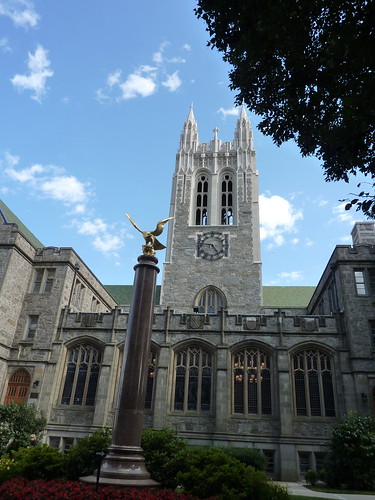
Image of BC's campus:

Thursday, March 05, 2009

Boston Globe Scoops A-B TAB on Conflicts-of-Interest Story

The Boston Globe's metro section ran as its top story yesterday a report of conflicts-of-interest among two members of the Boston Redevelopment Authority's Boston College Task Force, and another potential conflict-of-interest of the Allston-Brighton District 9 City Councilor Mark Ciommo.

In these days of community newspapers, where GateHouse Media's Wicked Local websites are fighting off a new challenge from the Boston Globe's YourTown entries, you would think that the little local paper would break a story like this -- particularly where the original public statements were made at local community meetings.

But you would be wrong. The Globe scooped the Allston-Brighton TAB -- on a local story on which many details are more than a year old.

Task force member John Bruno has a son who attends BC on an Allston/Brighton Scholarship provided through the community benefits portion of an earlier Article 80 review process -- a community benefits package that the task force is revisiting as part of the approval of BC's Institutional Master Plan. Task force member Denis Minihane owns property on Washington Street which he leases to BC to house its Boston College Neighborhood Center -- a center that BC touts as part of its Article 80 community benefits (page 13-9). And Councilor Ciommo's son recently was offered admission to BC, where he will be eligible for one of the Allston/Brighton Scholarships that would be part of the continued Article 80 community benefits (page 13-2).

The Allston-Brighton TAB reported on a meeting of the BC Task force in June 2007 when task force member John Bruno stated publicly that his son was attending BC on scholarship. Yet no mention in the TAB of the scholarship.

It reported on another meeting in January 2008 meeting of the task force when Bruno also stated that there was called by an ethics investigator -- likely from the Massachusetts State Ethics Commission -- and that he would fight the investigation. Yet no mention in the TAB story of the ethics investigation.

The TAB had a reporter in the room in a January 2009 meeting of the task force when Councilor Ciommo acknowledged that his son had been admitted to BC, and that he might be eligible for the scholarship -- but that he was unaware yet as to whether or not he would receive it. Yet no mention in the story of Ciommo's statement.

Why doesn't the Allston-Brighton TAB report on controversial stories, like this one on potential conflicts-of-interest, brewing in the community they cover?

One theory is that they try to avoid personal issues like these might be, even though they are alleged conflicts-of-interest among both elected officials (Councilor Ciommo) and part-time/volunteer municipal employees (the status of task force members, who are appointed by Mayor Thomas Menino and charged with advising the BRA's Board on the BC IMP).

The issues here, however, were not whisper campaigns run by enemies trying to discredit them (though they may have started out that way). Instead, these were public statements (with the exception of Minihane) at public meetings in apparent attempts to set the record straight in public. Bruno volunteered the information on two different occasions, and Councilor Ciommo was open in responding to the issue when raised by a member of the public -- both presumably speaking publicly in a way to get their message out. Why not report what they said?

Well, in a way, they did. The TAB provided a link to the Globe story yesterday in their blog.

The editor of the Allston-Brighton TAB, Valentina Zic, responded by email stating that the paper did not brush off the conflict-of-interest issues that had been raised at the meetings of the task force:
TAB reporters have always been encouraged to cover the conflict between Boston College and neighbors opposing aspects of its expansion. The issue is a complex one, and, with limited resources, we haven't been able to cover every aspect of the conflict. But there's never been a concerted effort to suppress conflict-of-interest discussions that happen at task force meetings.
Another possibility, however, is more personal about the newspaper staff. The TAB employed just one staff reporter until last year (now they have only free-lancers). Their reporter for the first half of 2007, Karen Elowitt, was, at the time, dating the son of the chair of the BC Task Force. Yet she had five bylines in the TAB for stories about the task force, and that no mention was made about the reporter's connections in the paper. (Note that Elowitt had left the paper before those three subsequent meetings that formed the basis for today's Globe story, and hence did not report on them.)

Zic responded that Elowitt had notified the paper of her potential conflict over reporting on the task force, but that the paper decided that she would be able to report fairly on the topic.

When covering community news, it may be difficult to find reporters with no inter-connections with their subjects, but isn't that why you might hire the occasional free-lancer to step in?

The issue is serious enough that Councilor Ciommo told the Globe reporter that he had filed paperwork with Boston's City Clerk about his potential conflict-of-interest with BC over his son's admission and possible scholarship. That sounds like a tacit admission from the councilor that this is a serious issue, not one to be brushed off as desperate ploys by opponents of BC's plans to build dorms and stadiums on the former St. John's Seminary land.


My personal opinion is that the TAB pulls their punches when reporting on local stories of a personal nature. People can get very defensive about stories that might be viewed -- rightly or wrongly -- as personal attacks; all you have to do is read the comments posted to the Globe's story at their website. The problem is that they showed excessive caution when a task force member -- appointed by the mayor to a governmental advisory body whose purpose is to advise the BRA on a $1 billion development project -- admitted that he had been contacted by an ethics investigator about a possible conflict-of-interest. That was enough of a red flag that warranted a story in the TAB.


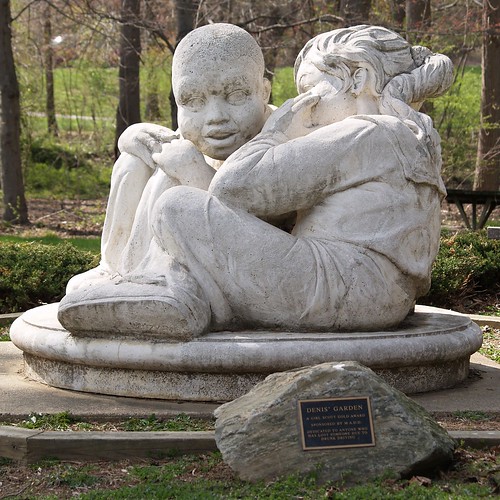
Image of sculpture "Whispers" [by Stephen Weitzman] by takomabibelot provided through a Creative Commons license.

Wednesday, September 17, 2008

Tax-Exempt Bonds and the Purchase of Land from the Archdiocese

Boston College completed the final portion of the purchase of the St. John's Seminary lands and buildings (except for St. John's Hall) from the Archdiocese of Boston in August 2007 for $65 million.

Where did the actual cash for that transaction come from?

At Tuesday night's meeting of the BC Task Force, while discussing a broader issue of the credit crunch and how it might apply to the 10-year construction plan BC has proposed, I made a statement that BC was given authority in August 2007 to issue $177 million in tax-exempt bonds, some of which was to go to the purchase of that property from the Archdiocese. I didn't think it was a controversial statement.

BC's Director of Public Affairs, Jack Dunn, strongly disagreed, saying that "the notion that BC used public money to purchase the archdiocese land is inaccurate."

In so doing, Dunn made a statement in direct contradiction with one from the Massachusetts Development Finance Agency ("MassDevelopment").

The press release put out by MassDevelopment on August 13, 2007, announcing that the agency was granting approval for BC to issue $176,980,000 in tax-exempt bonds, was clear in stating that BC would be using the money to purchase the remaining portion of the archdiocese land:
The school will use proceeds from a tax-exempt bond to finance several construction projects and purchase 18 acres of land and buildings from the Roman Catholic Archdiocese’s former Brighton headquarters. Projects include the construction of three new academic buildings, a recreation complex and student center on the school’s Chestnut Hill campus.
Sounds rather declarative to me.

What's more, the press release, issued on MassDevelopment letterhead, listed two contacts for further information: Alicia Tildsley of MassDevelopment; and Jack Dunn of BC. Dunn's name was right on the top of the release.

The difference between Dunn's statement and the MassDevelopment press release raises the question: Did BC actually spend the money from the bonds in the way that MassDevelopment last year thought they would spend it?


Image of tax-exempt bonds by Paul Levy at the Running a Hospital blog.

Thursday, June 19, 2008

Editorials on BC's Revised Housing Proposal

The Boston Globe's editorial page is pushing for Boston College to build denser housing on the Mods site as part of their revised institutional master plan -- and as a potential compromise with the neighborhood:
There should be room to resolve such issues within the 10-year construction schedule of dorms, new academic buildings, and recreation facilities — as long as BC remains flexible. One such opportunity is on the northeast section of the lower campus, where BC wants to replace 22 dreary modular housing units with a 175-student dorm and a swath of greenspace. Enlarging the dorm and moving up the schedule for its construction could postpone the need to build dorms on the contested former archdiocese site. Such compromises would also smooth the permitting process with the city.
The Boston Herald's editorial board, however, thinks BC's plan is fine just the way it is, quoting Eva Webster from the Boston Globe's news story to support their argument.

The Allston-Brighton TAB editorial sides with the Globe, arguing that BC should consider taller dorms on its main campus to minimize housing near residential areas, but is more positive about BC's purchase of 2000 Commonwealth Avenue.

Earlier: Boston Globe editorial in December 2007 that BC has not made a "convincing case" for the Brighton Dorms on the former St. John's Seminary land; adding a few stories to proposed dormitories on their main campus and "maximizing the use of land now occupied by outmoded modular housing units" were suggested.

Also:
Mayor Thomas Menino told the Globe's editorial board in January that he wants to see the dorms built south of Commonwealth Avenue. (The Brighton Dorms would be north of Comm Ave.)

Monday, June 09, 2008

BC Continues Buying Spree With Two-Family House on Lane Park

Boston College continued its recent buying spree with a purchase on Friday of the two-family house at 26 Lane Park for $740,000, a property that is one lot away from being a direct abutter to the eastern side of the former St. John's Seminary land purchased by BC in 2004 (map).

The difference between this purchase and previous ones is that neighbors on Lane Park requested that BC purchase this house because it was an student-occupied, absentee-landlord house that in the last few years had gotten completely out-of-hand.

The university's pursuit of housing stock, however, worries other Brighton residents about BC's further encroachment into the residential neighborhood.


Hard Partying Ruining Life For Lane Park Residents

What might drive those Brighton residents to ask BC to buy the house?

According to several Lane Park residents contacted for this story, the 10-12 students who had been occupying the house in each of the last few years were hard partyers who regularly ruined the quality of life for the street. They received a full-house warning from the university, yet kept on with the parties on Wednesdays-Sundays. The students regularly climbed over and damaged a neighbors stone wall in order to pass through his yard on their shortcut to Greycliff Road. They drove the wrong-way on one-way Lane Park. It looked like some students were living, presumably against code, in both the basement and attic. And, despite all the Lane Park neighbors attempts, they say they couldn't get the property manager, Jamie Lebowitz, to control the students.

When this year's students moved out recently they not only dumped their furniture on the sidewalk but also left all the house's doors open. At least when a fire alarm inside went off last week the responders had no difficulty gaining access to the vacant house to shut it off.

Those Lane Park residents joined with the rest of the neighborhood earlier this year to push for BC to house 100% of its undergraduates in on-campus dormitories. Even if BC decided to build sufficient dormitories, however, it would be many years before the buildings would be complete -- and the Lane Park residents wanted to be able to sleep at night before then.

Early in 2008, the neighbors approached Thomas Keady, Jr., BC's Vice President for Governmental and Community Affairs, asked that BC consider purchasing the house, and gave BC the owner's phone number. Their reason was that the house was so perpetually out-of-control that the neighbors were desperate for some relief. Ownership by BC -- along with faculty or graduate student tenants -- would be preferable to the student partying. BC subsequently made owner Craig Lebowitz an unsolicited offer on the house.

As the Lane Park residents see it, when BC agreed to purchase the house they were "actually providing a solution, not just generating the problem."

Not all Brighton residents see it that way. "The [neighborhood's] plan has always been to get the students onto campus," said Theresa Hynes of Hatherly Road. "BC is now getting the residents onto their campus by extending their campus to Lane Park and other stable neighborhoods."

The BC Task Force has, in the past, expressed similar opposition to BC's practice of purchasing residential housing stock in the area. The task force wrote a letter to BC in 2004 asking the university to stop:
Given the continuing housing crisis influencing the community, the Task Force is opposed to expansion that would result in losing residential housing stock. For example, we do not want a repetition of College Road and Hammond Street in Newton (where the college has purchased many homes) to occur on Lake Street and Foster Street in Brighton.
The house at 26 Lane Park is the only one on the long, looped street that is absentee landlord and fully occupied by only students. While a number of other houses along the street house students, they are owner-occupied -- whose owners choose their tenants carefully, maintain order, and therefore don't cause problems with the other neighbors. Number 26 stuck out on a relatively quiet street. (Two houses at the intersection with Foster Street, having Foster Street addresses 249 and 251, are also among the list of 39 "problem houses" whose tenants' behavior has been extensively tracked by the Radnor Neighborhood Association.)

BC's new house on Lane Park has apparently been well-maintained by the owner prior to Craig Lebowitz, and the few years of student rentals appear not to have damaged the house substantially. The neighbors do not appear to have a firm commitment from the university to who will reside at the house, but they say they have been told that junior faculty or visiting faculty are likely, while graduate students are also possible.

The unfortunate outcome of BC's recent house purchase, however, is that this fall those 10-12 off-campus students will have to live somewhere else -- presumably along the street of some different Brighton residents.


Is BC's Pattern of House Buying Continuing Into Brighton?

BC has been steadily acquiring residential housing stock in Newton, particularly on College Road, Hammond Street, Old Mayflower Road, and Mayflower Road. The College Road properties are slated for demolition and re-development in the university's long-range plan of 2006-7.

Is this practice of buying residential housing stock now being replicated in Brighton?

In the last several years BC has purchased three houses at 18-24-30 Wade Street [30 at right] and conducted extensive renovations last summer in order to use the properties for faculty housing. The manager of 26 Lane Park also owns at least one house on Wade Street, which is listed as owner-occupied.

In 2004-6 they also acquired three 19th-century houses at 188-192-196 Foster Street -- all listed on the National Register of Historic Places -- which the university proposes to demolish (rather than preserve) to make way for Jesuit seminarian and theological graduate student housing. Lane Park is a side street off of Foster Street to the south of these properties.

More recently, BC appears to have won the bidding at around $68 million for the 16-story apartment building at 2000 Commonwealth Avenue, which contains approximately 190 apartment units.

With BC's most recent purchase on Lane Park, there appears to be no end in sight for their buying spree.

All of these purchases are remarkable in that, with the exception of two of the Foster Street houses, they are in addition to the $173.400001 million that BC spent in 2004-7 to purchase 65 acres (and many buildings on them) of the St. John's Seminary land from the Archdiocese of Boston. Last year BC took out a $177 million tax-exempt bond to fund part of the land purchase and the construction of academic buildings on the main campus. But BC also has to figure out a way to pay for all the new buildings and athletics facilities they want to build on the new land, which they estimate at $800 million in construction costs over the next 10 years.

These expenditures constitute a large fraction of their $1.75 billion endowment. BC looks to be maxing out their credit cards. A good question for the banking industry is whether or not all this spending might impact their bond rating thereby making their borrowing more expensive.
Sunday, June 08, 2008

Boston Magazine Sees Dead Bodies in the Seminary

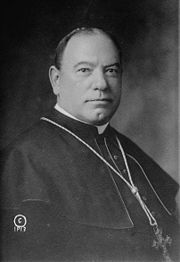
The latest issue of Boston Magazine carries a story ("Over His Dead Body") about Boston College's recent institutional expansion -- and the bodies that might be buried underneath. Reading the story is worth it just for the amusing artwork showing a cutaway of William Cardinal O'Connell's grave with his skeletal hand reaching up out of the ground. Melrose Place, anyone?

The hook for the story is the supposed problems that BC might have with Cardinal O'Connell's buried remains in their massive expansion plan into 65 acres of former St. John's Seminary land that they purchased in 2004-7, which was previously reported in the Boston Globe.

Yet in neither BC's 10-year proposed institutional master plan nor their 20-50 year long-range plan do they show any plans for construction at the site of Cardinal O'Connell's mausoleum; moving his remains is not really necessary for the other plans to go forward. Why BC officials insist on moving the remains is another issue, and is bound to stir up animosity from its Catholic constituency who look fondly upon the Cardinal.

Other graves on the site, however, may pose a more immediate problem, as was first reported here at Brighton Centered based on a letter written by the Massachusetts Historical Commission to the Boston Redevelopment Authority. A number of Sulpician priests were buried on the site and subsequently disinterred for reburial in Maryland, but the records of the disinterment are apparently either too vague or missing altogether.

Result: there might be unmarked graves somewhere on the site, but you don't know exactly where, so the Massachusetts Unmarked Burial Law may apply and therefore require an intensive search for the remains. That's a far worse problem than the remains of Cardinal O'Connell's at a location not currently slated for development.

Writer Paul McMorrow spells out the steps from graveyard to courthouse:
The college will likely try to tap some form of public funds in its quest to build out the chancery grounds, and if it does, that will give the historical commission a) statutory oversight, and b) standing in court. This means [Secretary of the Commonwealth William] Galvin can reserve the right to sue BC.
I'm not sure if there is a legal distinction between using public funds for purchasing the property and developing it, but BC has already tapped state support in the form of tax-exempt bonds issued last year by MassDevelopment, the state's finance and development authority, to the tune of $177 million for the express purpose of purchasing 18 acres of the former St. John's Seminary land. And I would also be surprised if there would be any problem getting standing when the Massachusetts Unmarked Burial Law applies to possible graves of the Sulpician priests. But those are questions for the lawyers and the courts, which just supports McMorrow's thesis that the graves constitute one way that opponents of BC's expansion could tie up their plans in court for quite some time.

The Boston Magazine story spins a good yarn, although the references to graves, and most of the other content, is not new. BC officials wouldn't speak to McMorrow on the record, and "one prominent alum" would only talk anonymously and on the condition that he be considered not to speak on behalf of the university. (I'd place a bet at Deval Patrick's Suffolk Downs Casino that he's talking about a well-to-do member of BC's Board of Trustees, but I could be wrong.)


Trying to Convert Beer Can Hill Into BC Flatland

There is some new content, however, in the continuation of the story about BC's longstanding attempts to purchase "Beer Can Hill," a four acre plot of state-owned land adjacent to Edmonds Hall:
According to a source close to the talks between Boston College and the MWRA, the school has said it wants to level the hill and use it for nothing more than soccer fields. A bit cavalier, considering that if Beer Can Hill collapsed, some 2 million people would lose water for days, if not weeks, says one MWRA [Massachusetts Water Resources Authority] source.
I would be surprised if anyone in the neighborhood believes that BC only wants to build soccer fields there; one BC student even reported after a 2006 planning session with Sasaki that BC wanted to build dorms on the site. In 2005 BC was unsuccessful in their attempts to gain ownership of the parcel in exchange for a promise to maintain the Chestnut Hill Reservoir. McMorrow continues:

BC knew that it would face opposition to its plans, so it hired an engineering team that told the MWRA's engineers, "We could do it safely." When the agency's board disagreed, the college brought in some political muscle: Jack Brennan, a lobbyist, former state senator, and close ally of ex–Senate President (and BC alum) William Bulger. Brennan's 2007 filings with the state show him performing work on BC's master plan and other unspecified "property issues."

McMorrow seems to have missed the point about why Brennan filled out paperwork registering as a lobbyist for BC. The answer would've helped tie together his story... but, alas, that tale is best left for another day. McMorrow continues:
But those efforts notwithstanding, his firm's lobbying of the MWRA board on BC's behalf—"It was some heavy stuff," the MWRA source says—didn't work. Last November, the board passed a resolution condemning the proposed plans, citing the potentially dire consequences of any damage to the water lines.

Still, no one thinks that setback will really stop BC. Asked whether the college is still interested in buying Beer Can Hill, Moran replies, "I haven't asked, but I don't have to ask that question to get an answer. They were interested in it 30 years ago, and they'll still want it 30 years in the future."

The MWRA's Advisory Board's minutes for the November 2007 meeting spell out concerns not narrowly concerned with Beer Can Hill, but with their general development plans in and around "Shaft 7", which supplies 2/3 of the drinking water for 2.1 million people in the Boston area:
Whereas, there is currently inadequate redundancy for Shaft 7; and

Whereas, any failure of Shaft 7 would have catastrophic consequences;

Therefore, be it resolved that on this 14th day of November, 2007, the MWRA Board of Directors, reaffirms its prior opposition to proposals by Boston College to develop a portion of MWRA-controlled property in and around the vicinity of Shaft 7 at Chestnut Hill unless and until redundancy is first constructed and fully operable...

Chairman [Ian] Bowles stated that he visited the site of Shaft 7. He noted that he felt less comfortable with Boston College’s proposal after the visit.
Bowles is not just the chairman of the MWRA's Advisory Board; he's also Governor Deval Patrick's Secretary of the Executive Office Of Energy and Environmental Affairs.

That is a damning development: that the state Secretary of Energy and Environmental Affairs is increasingly concerned the more he learns about BC's development proposals near that water main.

Friday, May 30, 2008

Councilor Ciommo on BC's Bid to Purchase Apartment Building at 2000 Comm Ave

Boston College has confirmed that they are pursuing purchasing the 16-story apartment building at 2000 Commonwealth Avenue in Brighton, according to a written statement by Jack Dunn and published reports at GlobeSt.com and the Allston-Brighton TAB. This follows news broken by GlobeSt.com last week that BC was secretively pursuing the property at a purchase price in the vicinity of $68 million.

Allston-Brighton District 9 City Councilor Mark Ciommo has now expressed the problems with the purchase. "I think the neighborhood has been clear about not taking residential stock [off the tax rolls]," he said last week in an interview.

The purchase of 2000 Comm Ave is "not something we want to encourage," Councilor Ciommo continued.

Construction of the building in 1987 was opposed by then-District 9 City Councilor Brian McLaughlin -- but supported by then-District City Councilor Thomas Menino, now Mayor of Boston.

BC previously tried unsuccessfully to purchase the property in 1993 because of strong neighborhood opposition -- and opposition of Paul Barrett, then-Director of the Boston Redevelopment Authority.

"If [purchase of the building] wasn't in the best interests of the neighborhood then, why would it be now?" said Theresa Hynes of Brighton earlier this week.


Converting Tax-Paying Housing Into a Student Dormitory

Director of Public Affairs Jack Dunn emailed GlobeSt.com to confirm that the university is interested in turning the building into an undergraduate dormitory:
Boston College’s interest in 2000 Commonwealth Ave. reflects the university’s desire to improve the quality of life for our neighbors and our students, by housing as many undergraduates as possible in university controlled residence halls.
The 190 or so units are a mix of 1- and 2-bedroom apartments. Assuming two students per bedroom means that roughly 600 students could be housed in the building.

BC's purchase of this building, followed by conversion to undergraduate dormitory use, would take approximately $400,000 off of the city's tax roll. (190 or so units averaging a bit over $2000 per unit per year.) By comparison, BC currently only pays $215,000 per year in Payments In Lieu of Taxes (PILOT) to Boston.

When asked if the potential removal of approximately $400,000 from the city's tax rolls is appropriate compared to the $215,000 in PILOT, Councilor Ciommo answered, "No."


BC Official Refuses to Meet With Neighborhood Civic Organization Over Issue

The Brighton Allston Improvement Association invited Thomas Keady, Jr., Boston College's Vice President for Governmental and Community Affairs, to meet with their group on Thursday, June 5th to discuss BC's possible purchase of the building.

Dick Marques, President of the BAIA, confirmed the invitation and that Keady declined the offer, saying that BC would instead only meet once the issue was more finalized.

Marques and Hynes interpreted Keady's refusal to attend the civic group's meeting as an attempt to meet with the neighborhood only after the deal was over and done with -- not in advance, when the neighborhood might provide input into whether or not the deal should happen in the first place.


Delays In Discussing Revised Institutional Master Plan With Residents

The BRA sent out a message two weeks ago canceling the May meeting of the BC Task Force, which caused head scratching amongst a number of neighborhood residents.

John Fitzgerald, project manager at the BRA overseeing BC's IMP filings with the city, wrote back to me:
It was rescheduled because BC has been working closely with the BRA, even as recently as last week where suggestions were made by the BRA on some options for BC. We just wanted to make sure that BC has had time to respond to our issues rather than holding a Task Force meeting where BC would not be ready to present anything concrete.
Adding two plus two together, I suspect that BC did not inform city officials about the purchase of 2000 Comm Ave until very recently, and that the city responded by asking BC to make modifications to the IMP by factoring in undergraduate housing at the new apartment building into their plans.

Councilor Ciommo confirmed that BC had been pursuing the purchase secretly, because he only found out about it by reading the story last week at the Brighton Centered Blog.


An obvious conclusion from all of this: there is now absolutely no need for a Brighton Dorm. By expressing their interest in 2000 Comm Ave as undergraduate student housing, BC is clearly stating that 16-story dormitories are an acceptable housing model for their undergraduates. The move to purchase 2000 Comm Ave directly contradicts repeated statements by Keady to the Brighton community that on-campus student behavior is poor in tall dormitory buildings.

BC can easily achieve 100% on-campus housing for their undergraduates by simply adding a few stories to dormitories already envisioned for their Main Campus, particularly at the current site of the Mods dorms. No need for any new dormitories on the former St. John's Seminary land -- or even purchasing 2000 Comm Ave -- to reach 100% on-campus housing.

Thursday, March 13, 2008

St. Elizabeth's Easter Egg Hunt Saturday Morning

St. Elizabeth's Medical Center is hosting their annual Gerry McCarthy Memorial Easter Egg hunt this Saturday morning. The event will take place on the former St. John's Seminary grounds -- now Boston College "Brighton Campus" -- near the Chancery and Gymnasium buildings.

Saturday, March 15th, 2008
2121 Commonwealth Avenue, Brighton, MA 02135

Preceding the egg hunts: Visits by Mayor Thomas Menino and the Easter Bunny, as well as displays by Fire Department and Ambulance Services

9:30 am -- Toddler Easter Egg Hunt
10:00 am -- Older Children Easter Egg Hunt

BYOB (bring your own basket)

Not only is Easter very early this year, but the hunt is a week before Easter, probably resulting in the earliest date on record for an Easter Egg hunt. Weather forecast? Rain and snow Saturday morning.


St. Elizabeth's Medical Center press release:

Saturday, March 15, 2008 - the week before Easter - St. E’s joins local children and families in festivities; commemorative gifts will be given to each child who attends

Caritas St. Elizabeth’s Medical Center celebrates Easter with its 25th Anniversary of the Annual Gerry McCarthy Memorial Easter Egg Hunt. During the 15-minute hunt, approximately 1,000 neighborhood children and their parents will search for more than 16,000 trinket-filled eggs. A special Toddlers’ Egg Hunt will also be held for children ages two and younger. Event location is the Archdiocese Chancery/Boston College at 2121 Commonwealth Avenue in Brighton.

Morning activities include a scheduled appearance by Boston Mayor Thomas M. Menino and a visit from Mr. and Mrs. Easter Bunny. There will also be demonstrations by the Boston Fire Department and Armstrong Ambulance and refreshments

Egg hunting for toddlers begins promptly at 9:30 a.m, Hunt for older children begins promptly at 10 a.m. Event will take place rain, snow, or shine.

The annual egg hunt is named in memory of the late Gerry McCarthy, an Allston-Brighton resident and youth activist, who started it in the 1960’s.

Thursday, September 20, 2007

Boston College to Submit IMPA This Fall -- Prior to Submitting New Master Plan

Boston College has recently completed their transaction to purchase the remaining land of the former St. John's Seminary from the Archdiocese of Boston. The purchase also included Bishop Peterson Hall (mid-20th century extension to the historic St. John's Hall) and the Library.

Since these two buildings are not currently part of Boston College's approved Institutional Master Plan from 2000 (as amended with an IMPA in 2006), BC must apply to extend their institutional master plan area to the buildings and allow their occupancy for institutional use. They wish to do some significant interior renovations to both buildings, too.

As a result, BC legal counsel Joe Herlihy announced at Tuesday's BC Task Force meeting that they will be submitting "in the next few weeks" an Institutional Master Plan Amendment to allow renovations of these two buildings and permit their institutional use. He said that BC would not be pursuing an expedited review process, but instead will follow the standard timeline defined in the Article 80 review process. BRA project manager John Fitzgerald said that the initial comment period (following the IMPANF) is 30 days, and the later comment period (following the DPIR) is 60 days, so the full process will take a minimum of three months.

BC's full, 10-year IMP will be filed later in the fall, possibly overlapping a bit with the approval process of the IMPA.

Bishop Peterson Hall will now be used for offices and classrooms of the Weston Jesuit School of Theology, which is re-affiliating with BC; WJST students will continue to reside in Cambridge and commute to the Brighton Campus for classes. The 2006 IMPA approved St. Williams Hall for these WJST offices and classrooms. It appears as though St. Williams Hall will no longer have an approved institutional use during the time period between approval of the upcoming IMPA and the later IMP; their plan is for office space. Housing for the WJST seminarians will also be deferred to the IMP. BC's goal is to get quick approval of a largely renovation project that will likely not be controversial, while deferring possibly controversial projects (that may slow down the approval process) to the IMP.

The WJST has 18 faculty, 15 staff, and 140 students who will be using Bishop Peterson Hall. The current occupants of the building are overflow offices from the Archdiocese's Chancery, who will be moving to Braintree, so there will not be an increase in density of workers between Bishop Peterson and St. John's Halls.

The Library will also be renovated, and will then be jointly used by the St. John's Seminary and the WJST. It requires HVAC mechanical upgrades, code updates, and ADA-compliant updates.


The meeting also included a discussion of the student behavior plan and its enforcement during the first three weekends of the school year. I will defer that information for a future post.

Tuesday, August 21, 2007

Brown and Dying Pine Trees in Former Seminary Property


Along the northern side of Commonwealth Avenue in Brighton, in the land currently owned by Boston College (or about to be purchased by them from the Archdiocese), are many pine trees. A lot of these pine trees -- but not all -- appear to be browning and dying.

What is going on? Disease or pests? Inadequate watering? Chemicals being used on the soil?

It long seemed like the Archdiocese didn't have the financial resources to maintain the Seminary property (e.g., trees along Lake Street), but Boston College probably does. And they have a highly knowledgeable Urban Ecology Institute who ought to be able to figure out what to do to save these trees.

Monday, August 13, 2007

Boston College Gets $177 million in Tax-Exempt Bond Financing

The Boston Globe (boston.com) reports that Boston College has been approved for a $177 million, tax-exempt bond financing package for land purchase and building construction:
MassDevelopment, the state's finance and development authority, announced today a $177 million financing package for Boston College.

The school will use proceeds from a tax-exempt bond to finance several construction projects and purchase 18 acres of land and buildings from the Archdiocese of Boston; the property is the archdiocese's former Brighton headquarters, Mass Development said.

Projects include the construction of three new academic buildings on BC's Chestnut Hill campus, Mass Development said.
I have personally wondered where BC was getting the money they needed for their $172.400001 million land purchases since 2004 from the Archdiocese of Boston.* They are somewhwat financially poor relative to other area universities, having a comparatively small endowment of $1.6 billion as of May 2007. Their institutional master plan projects probably run, in sum, $500 million to $1 billion, but those are only poorly-informed, ballpark estimates. It is well-known that they are currently trying to raise large amounts of money from donors (particularly alumni) to fund their land purchases and expansive building and stadium construction projects, but I am not aware how much money they have managed to raise for that campaign.

Securing the tax-exempt bonds announced today are probably a major route for them to raise cash very quickly to fund their building boom.

Notice how the press release / Globe article only states: "Projects include the construction of three new academic buildings on BC's Chestnut Hill campus." I wonder if they will also use some of the funds raised by these bonds to pay for their proposed undergraduate dormitories and baseball stadium on the former Seminary land.


One last note: the Globe article quoted above includes hyperlinks. This has been something that online Globe articles have lacked (or been spotty to include), despite repeated criticism from the online blogging community. Nice to see them inserting hyperlinks!


* $99.4 million in 2004 for part of St. John's Seminary land and 192 Foster Street, $8 million in 2006 for tribunal building and parcel, $1 in 2006 for 188 Foster Street, and $65 million in 2007 for remainder of Seminary land and all buildings except for St. John's Hall.


NOTE (added 8/14/07): The press release provided by MassDevelopment includes other projects which are clearly part of BC's future, unapproved institutional master plan:
The school will use proceeds from a tax-exempt bond to finance several construction projects and purchase 18 acres of land and buildings from the Roman Catholic Archdiocese’s former Brighton headquarters. Projects include the construction of three new academic buildings, a recreation complex and student center on the school’s Chestnut Hill campus.
The recreation complex is certainly part of the master plan, the "student center" probably also is (i.e., probably referring to something contained within the recreation complex), and the 18-acre land purchase is slated to be completed later this month.

Wednesday, June 20, 2007

Boston College Details Building Uses for Latest Land Purchase from the Archdiocese

At the BRA's BC Task Force Meeting last night (June 19, 2007), Boston College officials described the land purchase of the remaining St. John's Seminary land (and all but one building).

Boston College will not file their Institutional Master Plan Notification Form (IMPNF) until late August or early September 2007, according to Thomas Keady, Jr., BC VP for Government and Community Affairs. The delay is due to the Archdiocese recently exercising their sale option on most of the remainder of the St. John's Seminary land; while this was expected to happen eventually, the timing appears to have been more rapid than anticipated. The sale is currently slated to be completed around late August, according to Jeanne Levesque of BC's Office of Government and Community Affairs.

In particular, BC will be purchasing Bishop Peterson Hall (but not St. John's Hall), which means that they are planning moving some uses around among buildings on the Brighton Campus. Here's a map from a previous post:

Here's a breakdown of the new uses for buildings on/around the Brighton Campus:
  1. St. John's Hall: remain as property owned and operated by St. John's Seminary, although its form of ownership will be re-classified as confdominium unit(s). BC will own the land under and around St. John's Hall, while the Seminary will own the building itself. BC and the Seminary will jointly run a kitchen. St. John's Hall has four floors plus a basement level.
  2. St. John's Seminary will receive an exclusive easement for parking and access to St. John's Hall. They currently have approximately 40 parking spaces; there was no indication of the number of spaces to be included in the deal.
  3. Bishop Peterson Hall will convert to BC ownership and use for offices/classrooms of the Weston Jesuit School of Theology. There will be no residential uses for the building. These offices/classrooms for WJST were originally slated for St. Williams Hall (which BC already owns).
  4. St. Williams Hall will now be used for academic, administrative, and/or business offices. It sounds like More Hall offices, for example, will now be moved to St. Williams Hall to free up the More Hall site for a new development.
  5. St. John's Library will be used jointly between BC and the Seminary; WJST will relocate their library collection into this building.
  6. Chancery will remain administative offices for Archdiocese for one year after BC purchases the property, prior to the Archdiocese's move to Braintree. BC's long-range plan shows that the Chancery will eventually be razed to make way for new buildings (e.g., academic) and their new access road into the campus. Ditto for the Creigh Library, as best as I could tell.
  7. Parking garage (?) and parking uses will remain for the time being.
Jeanne Levesque also announced that they would have a master plan website go public on July 16, 2007. Tom Keady said that the IMPNF and IMP would be made available on their website. Gerald Autler of the BRA said that BC Task Force meeting minutes will eventually be made available on the BC website; he planned on sending them out electronically to "everyone on his list" in the meantime.

The meeting had a lot more activity going on, though... and that will have to wait for post #2. Unless the A-B TAB beats me to it with their teaser:
"We know BC task force meetings can generate a lot of anger, but last night’s apparently took the cake is word on the street –at least as far as the amount of yelling and screaming it generated. One person apparently even felt the need to call the cops. We’ll have a story later."

Wednesday, June 13, 2007

Liberal and Conservative Catholics In Conflict Over Archiodecsan Sale to Boston College

The Boston Globe reports that the Rev. John Farren, a Dominican friar who resigned May 24 as head of St. John's Seminary, has written a letter to Sean Cardinal O'Malley objecting to the sale of most of the remaining seminary land to Boston College. It seems to be pitting at least one prominent, conservative Catholic against the more liberal Jesuits about to move in.

While Rev. Farren raised a number of "financial and legal concerns," he saves his harshest words for his staunch opposition to having Jesuit seminarians (from BC's new affiliation with the Weston Jesuit School of Theology) alongside St. John's Archiodesan seminarians:

The Rev. John A. Farren... warned in the letters last month that the "doctrinal integrity" of St. John's is at risk because of increased proximity to two Jesuit-run Catholic institutions, Boston College and Weston Jesuit School of Theology, which are expected to move into buildings currently held by the seminary.

"A sign of this is found in the fact that several professors of WJST are currently under investigation by the Congregation for the Doctrine of the Faith," [Rev. Farren] wrote, referring to the Vatican agency that investigates theologians accused of doctrinal error. "Several professors at WJST are self- professed gays or lesbians. Collaboration at such an institution is not good policy for St. John's Seminary."

Weston Jesuit and Boston College are generally considered liberal institutions open to a wider range of theological views than St. John's. Under Farren's leadership, several members of the seminary faculty perceived as liberal were ousted.

Cardinal O'Malley explained the sale on his blog and, in more detail, in a letter to Boston's Catholic newspaper, The Pilot. He has apparently written another letter to Archdiocesan priests in response to Rev. Farren's comments, but it appears not to have been released.

Monday, May 28, 2007

Two Perspectives on Sale of St. John's Seminary Lands to Boston College

First, Seán Patrick Cardinal O’Malley, in his blog, writes about his perspective on the sale of most of the remainder of St. John's Seminary to Boston College:
Proceeds from this sale will allow the Archdiocese to invest resources for the benefit of our parishes, clergy, St. John’s Seminary and the many important programs that serve a large number of people.
Several of those items were made very clear in the unprecendented release of the Archdiocesan financial records in the past year, but it is hard to avoid pointing out an apparent omission from Cardinal O'Malley's list: financing the settlements with the victims of sexual abuse by Archdiocesan priests.

Second, the head of St. John's Seminary resigned (a month earlier than scheduled) to protest the sale:
The Rev. John A. Farren, rector of St. John's Seminary since 2003, had been scheduled to step down on June 30 to take a new assignment in New York City, but Farren resigned last week after the school's board voted to support the sale of 18 acres of archdiocesan land to Boston College. Farren e-mailed a letter of resignation to the board on May 24 that detailed his fierce opposition to the sale, which includes the seminary's Bishop Peterson Hall as well as the seminary library.